For US Healthcare Professionals Only


For US Healthcare Professionals Only
ADDITIONAL DATA

COMPASS-31 is a patient-reported questionnaire used to evaluate symptoms of autonomic dysfunction, including GI and orthostatic intolerance*†‡3
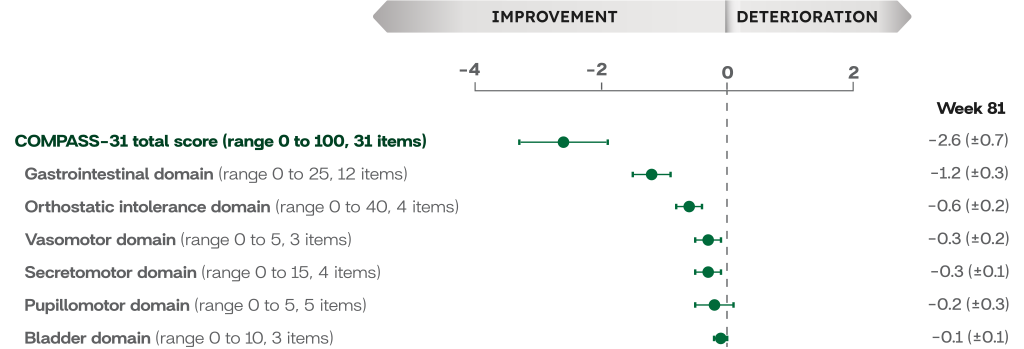
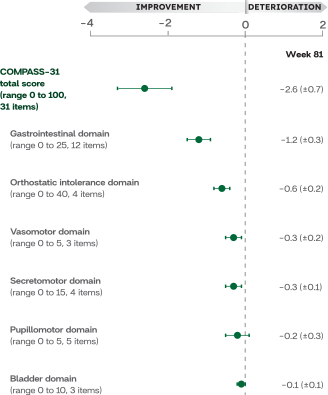
See study design.
Autonomic symptoms in hATTR-PN may emerge early and can greatly reduce quality of life4-6
*COMPASS-31 total score at baseline in patients treated with WAINUA (n=141) was 19.4 (SD, 11.3).2
†COMPASS-31 is a 31-item questionnaire that evaluates autonomic function across 6 domains. Final scores range from 0 to 100, with higher scores indicating worse autonomic dysfunction.1
‡This analysis did not include the external placebo group, as COMPASS-31 scores were not collected in the NEURO-TTR trial.2
COMPASS-31 is a 31-item, self-administered questionnaire that evaluates autonomic function across 6 domains3:
Gastrointestinal
Covers symptoms like early satiety, bloating, vomiting, and bowel movement irregularities
Orthostatic intolerance
Evaluates symptoms like dizziness or lightheadedness upon standing
Vasomotor
Assesses symptoms related to blood vessel function like skin color changes
Secretomotor
Assesses problems related to sweating and dryness of eyes or mouth
Pupillomotor
Assesses light sensitivity and focusing difficulties
Bladder
Evaluates urinary symptoms, including incontinence and difficulty in voiding
COMPASS-31, Composite Autonomic Symptom Score-31; GI, gastrointestinal; hATTR-PN, polyneuropathy of hereditary transthyretin-mediated amyloidosis; SD, standard deviation; SE, standard error.
WARNINGS AND PRECAUTIONS
ADVERSE REACTIONS
Most common adverse reactions (≥9% in WAINUA-treated patients) were vitamin A decreased (15%) and vomiting (9%).
INDICATION
WAINUA injection, for subcutaneous use, 45 mg is indicated for the treatment of the polyneuropathy of hereditary transthyretin-mediated amyloidosis in adults.
Please see the full Prescribing Information.
You may report side effects related to AstraZeneca products.